On this page
- Do you need an International Driving Permit?
- Renting a car in Scotland as an American
- Driving on the left: the rules that catch Americans out
- Drinking and driving: Scotland’s limit is lower
- Single-track roads and passing places
- Driving in Edinburgh and Glasgow
- Fuel, distances and winter driving
- Should you drive yourself, or hire a private driver?
- Yes. Visitors can drive in Scotland on a valid US driver’s license for up to 12 months.
- An International Driving Permit is not required by law, though the odd rental company may ask for one.
- Scotland drives on the left, most rental cars are manual, and the drink-drive limit is lower than in the US.
- Many Highland roads are single-track: slow, narrow and spectacular. Plan more time than the map suggests.
It is one of the first questions American visitors ask when they plan a trip to Scotland, and the short answer is yes. If you hold a full, valid US driver’s license (or licence, as it is spelled here), you can drive in Scotland, and the rest of Great Britain, for up to 12 months from your arrival. You do not need to take a test or exchange your license.
Being allowed to drive and enjoying it are two different things, though. Scotland drives on the left, the cars are usually manual, and the roads to the places you have come to see are often narrow, winding and single-track. This guide covers what you need to rent a car, the rules that most often catch Americans out, and how to decide whether to drive yourself or book a private driver.
Do you need an International Driving Permit?
No, not by law. A US license is printed in English, so it is accepted on its own in Great Britain. A small number of rental companies still ask for an International Driving Permit (IDP) as a translation, so check your rental terms before you fly. If you want one, they are issued in the US by AAA, and you must apply before you leave home.
Renting a car in Scotland as an American
Renting a car is straightforward, but a few things work differently from home:
- Age. Most companies rent to drivers from 21 or 23, with a young driver charge under 25. Some set an upper age limit too, so check the terms if you are over 70.
- Credit card. The main driver usually needs a credit card in their own name for the deposit. Debit cards are often refused.
- Manual or automatic. Most rental cars in the UK are manual (stick shift). Automatics cost more and sell out in summer, so book one early if you need it.
- Insurance. Basic cover is usually included but comes with a high excess (deductible). If you rely on your credit card’s rental cover, confirm before you travel that it applies in the UK.
- Size. Pick a smaller car than you would at home. Village streets, car parks and Highland roads are narrow, and luggage space in UK cars is tighter than it looks online.
Driving on the left: the rules that catch Americans out
Driving on the left takes most people a day or two to settle into. The bigger surprises are the rules and habits that differ from the US:
- Keep left, overtake on the right. On motorways and dual carriageways, the left lane is the normal driving lane. Move back left once you have passed.
- Roundabouts. Traffic goes clockwise, and you give way to vehicles already on the roundabout, coming from your right.
- No turning on a red light. There is no equivalent of the US right turn on red. Red means stop, whatever direction you are turning.
- Speeds are in miles per hour, and enforced with fixed and average-speed cameras, including on long stretches of the A9 to Inverness.
- Phones. Holding your phone while driving is illegal, even to check directions. Use a mount, or let a passenger navigate.
- Seat belts are compulsory for everyone in the car, front and back.
- Towns and cities
- 30 mph, and 20 mph on many streets (including most of Edinburgh)
- Single carriageway roads
- 60 mph
- Dual carriageways
- 70 mph
- Motorways
- 70 mph
These are the limits unless a sign says otherwise. Lower limits are common through villages and on winding roads, and the national limit is a maximum, not a target: on many Highland roads, 40 mph is fast.
Drinking and driving: Scotland’s limit is lower
Scotland has one of the lowest drink-drive limits in Europe: 50 milligrams of alcohol per 100 millilitres of blood, the same as a blood alcohol content of 0.05%. In most US states it is 0.08%, and the rest of the UK uses the higher figure too. In practice a single pint of beer or a large glass of wine can put you over, so the safest rule is not to drink at all if you are driving.

That matters in a country famous for its whisky. If a distillery tour is on your list, someone in the group has to stay sober, or you need someone else to drive. It is one of the most common reasons visitors book a private whisky tour with a chauffeur.
Single-track roads and passing places
Away from the main routes, especially in the Highlands, on Skye and on the islands, many roads are only wide enough for one car. Every few hundred yards there is a widening called a passing place, often marked with a white diamond sign. The etiquette is simple, and locals expect visitors to follow it:
- When you see a car coming, pull into the nearest passing place on your left, or stop opposite one on your right so the other car can use it.
- If a car behind you wants to go faster, pull into a passing place and let it by.
- Never park in a passing place, even for a quick photo.
- Give a small wave of thanks. Everyone does.
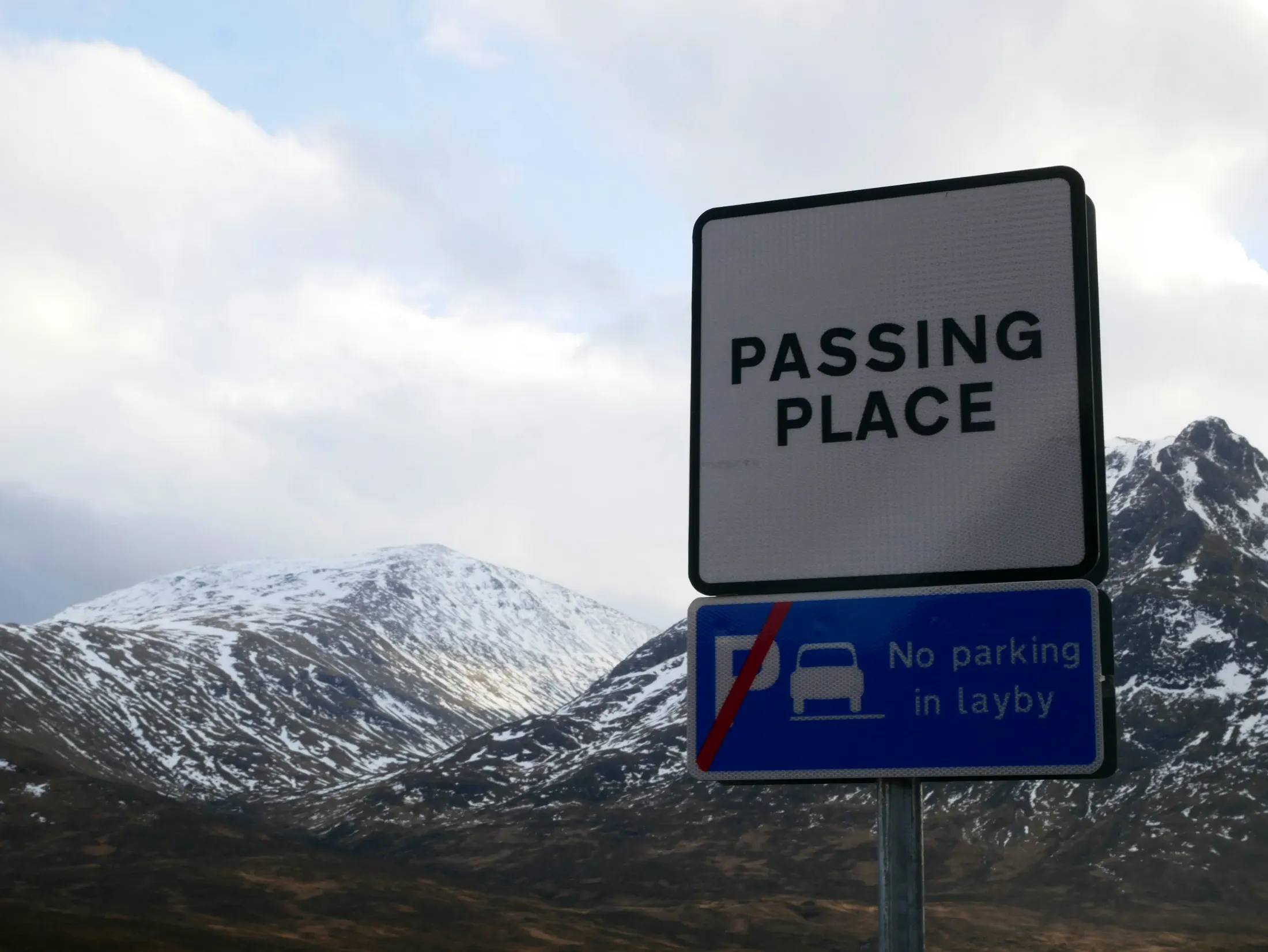
Single-track roads are slower than they look on a map. A 40-mile stretch can easily take an hour and a half, and sheep, deer and cyclists share the road with you. Build in more time than your satnav suggests.
Driving in Edinburgh and Glasgow
For city stays, a car is more trouble than help. Edinburgh, Glasgow, Aberdeen and Dundee all have Low Emission Zones that older vehicles may not enter (most rental cars meet the standard, but it is worth checking). Bus lanes carry fines during their hours of operation, parking is limited and expensive, and many central hotels have no car park at all. Edinburgh’s Old Town is a maze of one-way streets and cobbles.

Most visitors are better off collecting a rental car on the day they leave the city, or booking an airport transfer in and a driver for the days they want to explore.
Fuel, distances and winter driving
Fuel is sold by the litre, and pumps are labelled unleaded (petrol, the US gas) or diesel. Check which one your rental car takes, and read the label on the pump rather than relying on the colour of the handle. Road signs and distances are in miles. In the far north and west, fuel stations can be 50 miles or more apart and some close early, so fill up when you can.
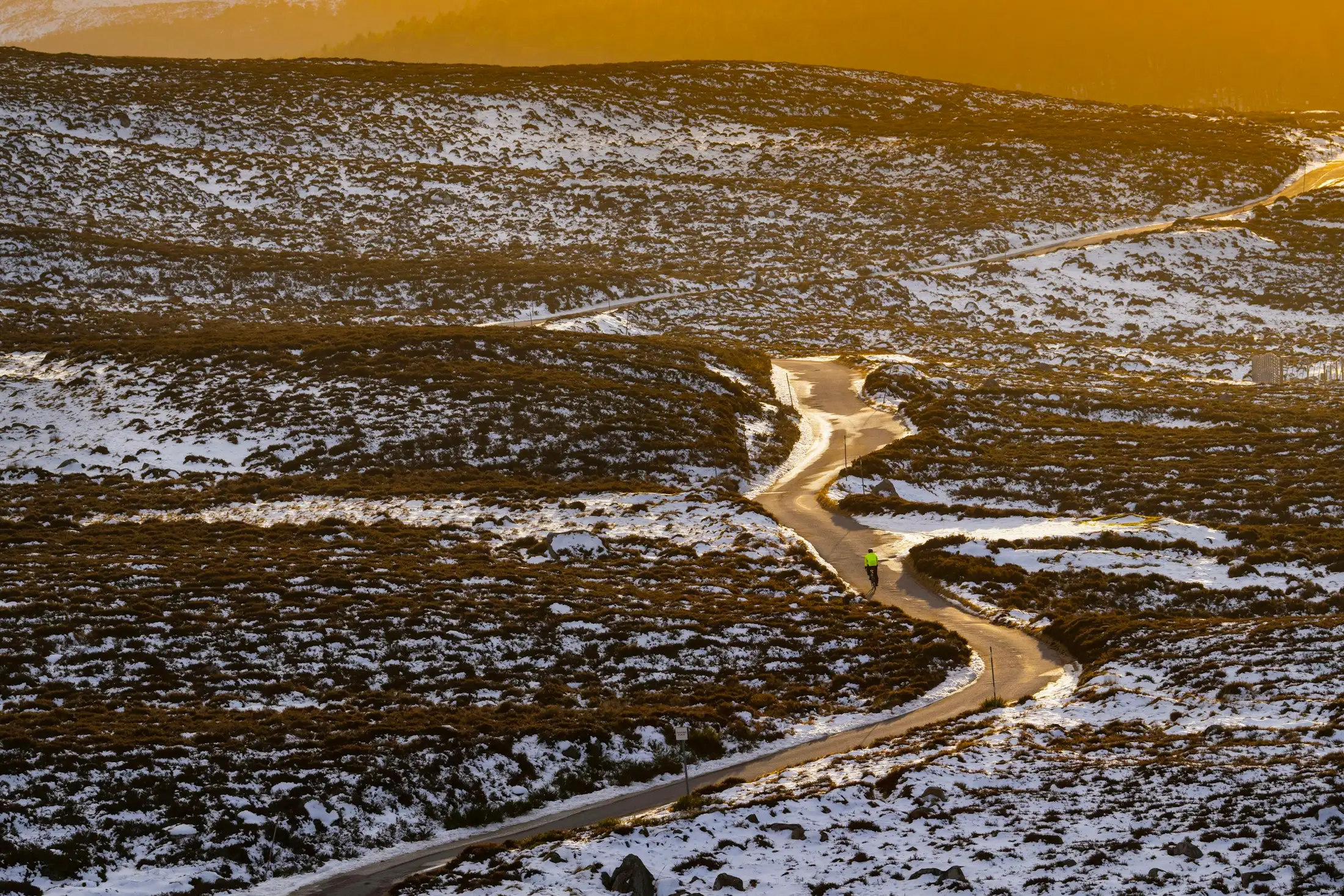
Between November and February, Scottish daylight is short: in Edinburgh the sun sets before 4 pm in December. Snow and ice close Highland passes from time to time, and the weather can change within an hour. If you are visiting in winter, plan shorter driving days and check the forecast before you set out.
Should you drive yourself, or hire a private driver?
Driving yourself makes sense if you are confident on the left, want complete freedom over a long trip, and are happy to plan around a manual car, narrow roads and no drinking. Plenty of visitors do it and love it.

A private driver makes more sense if you want to look at the scenery rather than the road, are travelling as a group or with golf clubs, plan to visit distilleries, or only have a few days and want to make the most of them. Your chauffeur handles the roads, the parking and the timings, knows where to stop, and can take you from the airport to St Andrews, Glencoe or Skye in a Mercedes-Benz with room for everyone’s luggage. See our private tours, golf transfers and airport transfers, or send us your plans for a personal quote.
Questions visitors ask
Yes. Visitors can drive in Scotland, and the rest of Great Britain, on a full, valid US driver’s license for up to 12 months from arrival. Bring the physical license with you.